How Is Inheritance Divided Among Siblings? Statutory Shares of Legal Heirs
11 November 2025
How Are Foreign Divorce Judgments Made Valid in Türkiye?
2 December 2025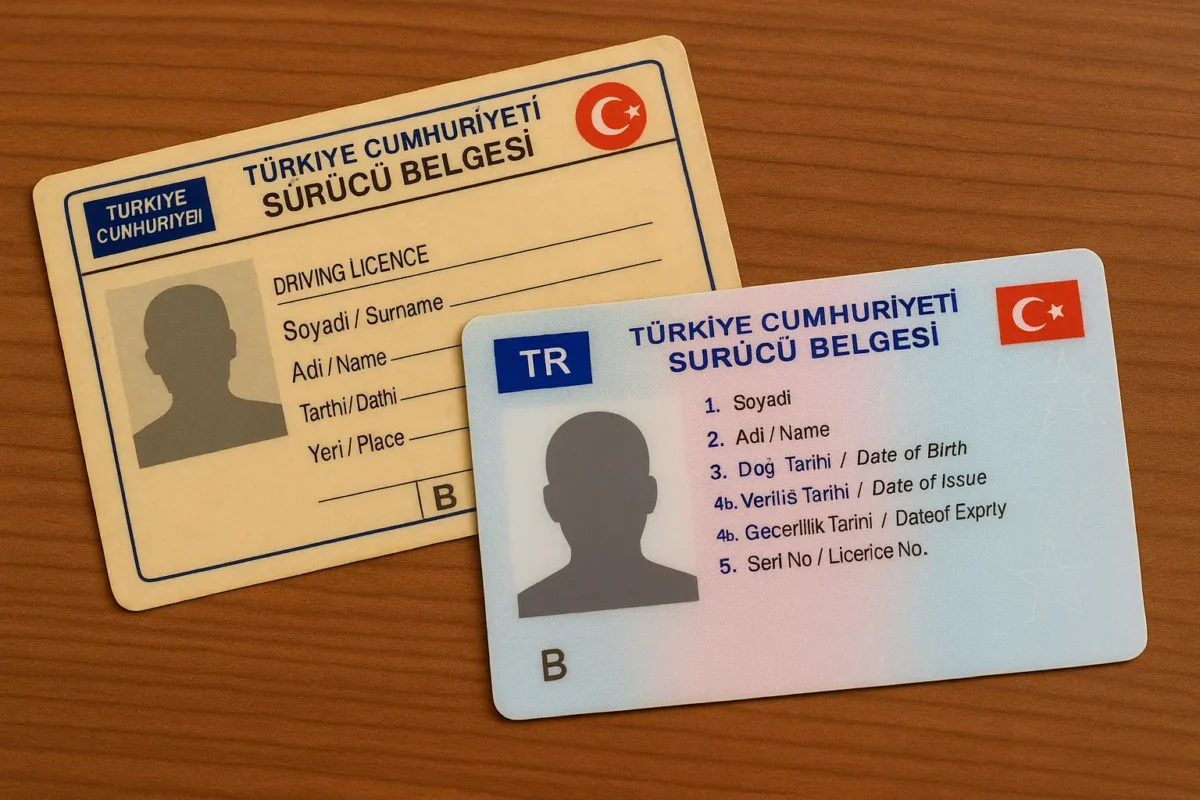
Turkey has been transitioning from pre-2016 “old-format” driver’s licenses to new biometric cards for several years. With the final deadline approaching, millions of drivers still hold old licenses — raising an important question: If a driver with an old-format license is involved in a traffic accident, will compulsory traffic insurance or comprehensive (kasko) insurance cover the damage?
This article evaluates the issue from a legal and insurance-law perspective, focusing on:
- The legal status of old-format licenses
- Coverage rules for compulsory traffic insurance
- Kasko insurance exclusions
- Subrogation (recourse) claims by insurers
- The rights of passengers and third parties
This text is for informational purposes; specific cases should always be evaluated by a qualified attorney.
1. Legal Status of Old-Format Driver’s Licenses in Turkey
According to announcements by the Ministry of Interior and the General Directorate of Population and Citizenship Affairs, old-format licenses must be renewed by 31 October 2025. After this date:
- Old-format licenses lose their legal validity.
- A driver using such a license is considered as operating a vehicle without a valid driver’s license.
- Administrative fines and vehicle-related sanctions may apply.
- Insurance companies may treat the driver as unlicensed, triggering exclusion or recourse mechanisms.
Therefore, whether a license is still legally valid is the key factor that determines insurance liability.
2. “Invalid License” Means “Unlicensed Driver”: Legal Consequences
Under the Turkish Highway Traffic Law, a vehicle may only be operated by a person holding a valid driver’s license of the appropriate class. An expired, suspended, or legally invalidated license does not meet this requirement.
If a driver with an expired old-format license causes an accident:
- They may face administrative fines and possible vehicle impoundment.
- Their civil liability (compensation responsibility) may increase.
- Insurance companies may rely on policy terms stating that the driver must hold a valid license.
In insurance law, a driver with an invalid license is treated similarly to an unlicensed driver.
3. Will Compulsory Traffic Insurance (Zorunlu Trafik Sigortası) Pay for the Damage?
3.1. Fundamental Principle: Protection of Third Parties
Compulsory traffic insurance is designed to protect third parties harmed in a traffic accident. Therefore, even if the policyholder or driver violates certain conditions, insurers generally must pay third parties first.
In practice, this means:
- Initial Payment:
The insurer typically pays for the material and bodily damages of the other party (third party). - Recourse (Rücu):
After paying, the insurer may file a recourse claim against the driver/vehicle owner if the driver lacked a valid license.
Thus, the correct answer to the frequently asked question:
“If I have an old-format license and cause an accident, will traffic insurance pay?”
is:
“Yes, it usually pays third parties — but the insurer may later seek reimbursement from you.”
3.2. Conditions for Recourse
For an insurer to exercise its right of recourse:
- The driver must lack a legally valid license at the time of the accident.
- This must be proven through the accident report, police records, or official documents.
- The insurer must have paid third-party compensation in accordance with the policy.
Courts evaluate each case individually, including whether the invalid license contributed to the occurrence of the accident (causal link).
4. Will Kasko (Comprehensive) Insurance Cover the Damage?
Unlike compulsory traffic insurance, kasko insurance is a voluntary private contract.
Kasko policies and the General Conditions of Motor Insurance typically include explicit exclusions such as:
“No coverage shall apply for damages occurring while the vehicle is operated by a person who does not hold a valid driver’s license under the Highway Traffic Law.”
The consequences:
- If the old-format license is still legally valid, insurers cannot deny payment solely because the card is “old-format.”
- However, after the expiration date (when the license becomes legally invalid), insurers may completely deny coverage, treating the driver as unlicensed.
In many cases, kasko coverage may be lost entirely if the driver has failed to renew an old-format license after the legal deadline.
5. Rights of Passengers and Third Parties in Accidents Involving Old Licenses
Even if the driver’s license is invalid:
- Passengers in the vehicle maintain their right to compensation.
- Other vehicle occupants or pedestrians are also protected.
- The insurer must pay third-party damages within policy limits.
- The insurer cannot seek recourse from passengers; it can only recourse against the driver and vehicle owner.
Thus, invalid or old-format license issues do not prevent injured third parties from claiming compensation.
6. Frequently Asked Questions (FAQ)
6.1. “If my old-format license is expired and I cause an accident, will traffic insurance pay?”
Yes — third-party damages are generally paid.
But after payment, the insurer may recourse (seek reimbursement) from you because you were driving without a valid license.
6.2. “Will kasko insurance cover my own vehicle’s damage?”
Most likely no, if the license is legally invalid.
Kasko insurers typically rely on the “valid license” condition to reject claims.
6.3. “What if someone else with a valid new-format license was driving my car during the accident?”
Coverage is determined based on the actual driver at the time of the accident.
If the driver had a valid license at that moment:
- Traffic and kasko insurance are generally unaffected.
- Your expired old-format license is irrelevant if you were not driving.
6.4. “The insurer refused to pay because of my old-format license. What can I do?”
You may:
- Review the policy’s general and special conditions.
- Request a written explanation for the denial.
- File an application with the Insurance Arbitration Commission (Sigorta Tahkim Komisyonu).
- Initiate a lawsuit to challenge the insurer’s denial.
Issues such as causal link, insurer’s duty to inform, and policy wording are often evaluated in detail by courts.
6.5. “Is there an administrative fine for using an old-format license after the deadline?”
Yes.
Driving after the legal expiry date results in administrative sanctions even if no accident occurs.
7. Practical Recommendations for Drivers with Old-Format Licenses
- Do not drive until your old-format license is renewed; insurance coverage may be severely limited.
- When renewing your traffic or kasko policy, request written clarification about coverage conditions related to valid licenses.
- If involved in an accident, keep all documentation (accident reports, correspondence, denial letters) and seek legal assistance promptly.
- If facing a recourse claim or denial of kasko coverage, act before legal deadlines expire.
With the transition to new-format driver’s licenses, the legal validity of old-format licenses has become crucial for insurance coverage. If an old-format license is not renewed by the deadline:
- Compulsory traffic insurance usually pays third parties but may recourse against the driver later.
- Kasko insurance may deny coverage entirely.
- Passengers and third parties retain their full compensation rights.
For drivers, renewing the old-format license is essential not only for avoiding fines but also for maintaining insurance protection. In case of disputes with insurers, timely legal consultation is highly recommended.