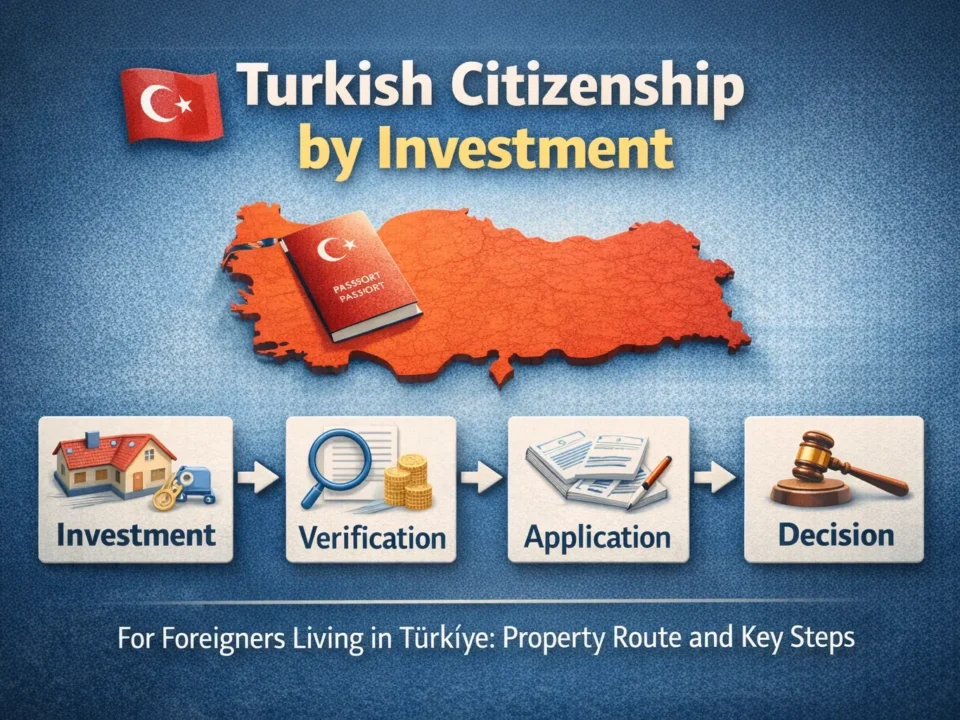
Turkish Citizenship by Investment & Residency-to-Citizenship Pathway
25 January 2026
Vehicle Depreciation (Diminution in Value)
30 January 2026
1) What is corporate counsel? A function broader than “litigation follow-up”
Corporate counsel is an ongoing legal service carried out to manage a business’s legal risks, make its decisions legally sound, and establish a contract–compliance–dispute strategy aligned with commercial goals. It is not merely about filing lawsuits or running enforcement proceedings; it is about legally strengthening the company’s “way of doing business.”
In practice, corporate counsel has three core roles:
- Preventive law (preventive): designing processes and contracts before risks arise
- Risk/compliance management (compliance): regulatory compliance, internal policies, and control mechanisms
- Dispute management: fast resolution once a dispute arises, collections, litigation/arbitration strategy
The value of corporate counsel is often not visible in “cases won,” but in crises that never happen, flawed contracts that are never signed, and well-designed processes that work.
2) Corporate counsel models: external counsel, retainer counsel, in-house
Companies of different sizes work with different legal service models:
2.1) External counsel (outsourced counsel)
- Advantage: flexible capacity, diverse expertise, ability to manage cost on a matter-by-matter basis
- Risk: fragmented advice without knowing the company and its processes; weak institutional memory
2.2) Retainer corporate counsel (contract-based)
- Advantage: continuity, standardized documentation, quick responses
- Risk: if the contract and scope are unclear, disputes arise over “what is included vs. excluded”
2.3) In-house legal department / counsel
- Advantage: deep understanding of internal processes, proactive compliance, faster decision cycles
- Risk: capacity limits for a single person/team; need for external specialists
In practice, the most efficient structure is often hybrid: ongoing counsel for core processes + external specialists for critical matters.
3) Core workstreams of corporate counsel (a full scope map without skipping topics)
Although responsibilities vary by sector, the “core” workstreams are common across most companies.
3.1) Corporate structure and governance (Commercial Code focus)
- Correct structuring of the company type (JSC / LLC / others)
- Articles of association, capital structure, share transfers / shareholder relations
- Board/management resolutions: board of directors / managers’ board workflows
- General assembly preparation: agenda, call, quorum, minutes
- Authority matrix: who can sign which contract and up to what limit?
- Trade registry matters: registration/announcement, signature circulars, representation powers
- Company books and orderly recordkeeping of resolutions (corporate discipline)
The “silent risk” here is this: improperly adopted resolutions and unauthorized signatures accumulated over years can paralyze a company in a crisis—even before litigation appears.
3.2) Contract management (Contract Lifecycle Management – CLM)
Contracts are the busiest area of corporate counsel. It is not only drafting; it is managing the entire lifecycle:
- Standard templates: sales, services, distributorship, dealership, supply, NDA, licensing, lease, partnership
- Negotiation strategy: “red lines” and negotiable areas
- Risk clauses: limitation of liability, penalties/liquidated damages, termination, default, force majeure, confidentiality, data, subcontracting, assignment restrictions
- Signing authority and workflow: who approves and who signs?
- Post-signature follow-up: delivery–acceptance, invoicing, payment, renewals, term tracking, notice mechanisms
- Contract archive and version control: which text is in force?
Key point: It is not enough for a contract to be legally strong; it must be operationally workable. If you commit in the contract to something the business unit cannot actually deliver, you create a legally strong but practically breach-prone arrangement.
3.3) Collections, receivables management, and enforcement strategy
The most frequent need in companies is fast collection and reducing receivables risk.
- Pre-contract credit risk analysis: limits, collateral, maturity
- Security instruments: cheques/promissory notes, guarantees, pledges, mortgages, bank letters of guarantee, set-off arrangements
- Collections SOP: reminder → formal notice → restructuring → enforcement → litigation/arbitration
- Current account and reconciliation discipline
- Objection management: lifting/cancellation of objection, evidence package, commercial books and records
Corporate counsel pursues two goals here: (1) accelerate collections, (2) control collection costs and reputational risk.
3.4) Employment law and HR processes
For many companies, employment law generates the highest volume of disputes.
- Employment contract templates (indefinite/fixed-term, executive, remote work, non-compete)
- Legal framework for wage, bonus, and benefits systems
- Disciplinary process, defense statements, incident minutes mechanisms
- Performance and termination strategy: distinction between valid reason vs. just cause
- Workplace accident and occupational disease processes
- Mediation, reinstatement claims, severance/notice pay, overtime, annual leave disputes
- Internal training and policy set: harassment–mobbing–equality–ethics
The core contribution of corporate counsel here is not to “produce documents” at termination, but to establish correct documentation from hiring onward to reduce the likelihood of crises.
3.5) Data protection and data governance (KVKK / Turkish DP Law)
Data law is sometimes treated as “paperwork,” but it carries some of the highest administrative risks.
- Data inventory and process mapping: what data, for which purpose, for how long?
- Privacy notices and consent management (where truly required)
- Data processor agreements and vendor risk management
- Security breach management: incident response plan, log and evidence preservation
- Employee data: personnel files, CCTV, email/IT policy
The most common mistake is publishing texts without building the process. Compliance is not a text; it is a process.
3.6) Competition, consumer, e-commerce, and marketing law
Critical areas especially for sales-driven companies:
- Distance sales contracts and return/cancellation processes
- Commercial communications, consent management, and marketing compliance
- Advertising claims, undertakings, campaign terms
- Competition risks in dealership/distributorship agreements
- Platform contracts and content liability
3.7) Intellectual property (trademarks, designs, copyright, software)
- Trademark filing strategy, opposition and infringement management
- License agreements, software development and source-code delivery
- Agency/creator agreements: copyright assignment, scope of use, term, channels
- Confidentiality and know-how protection
3.8) Real estate and lease processes
- Commercial lease agreements, adaptation risks, eviction mechanisms
- Security and maintenance/repair arrangements in warehouse/factory/office leases
- Construction/fit-out contracts, delivery–acceptance protocol
3.9) Financing, banking relationships, and collateral
- Loan agreements, bank guarantees, guarantee/pledge structures
- Cross-default and collateral chains in group companies
- Aligning cash flow with legal risk
3.10) Corporate transactions, M&A, and investment
- Due diligence (legal review)
- Share transfer agreements and closing conditions
- Shareholders’ agreements, veto/pre-emption/drag-along/tag-along rights
- Governance powers and exit scenarios
3.11) Dispute resolution: litigation, arbitration, mediation, settlement
- Pre-dispute strategy: early assessment, evidence preservation
- Mediation preparation: damage calculations, offer strategy
- Arbitration clause drafting and enforceability
- Litigation management: power of attorney, timetable, risk report
4) “Daily operations” in corporate counsel: how is the workflow built?
To be efficient, corporate counsel should be run with a Legal Ops mindset.
4.1) Intake and request management
- Request channels: email, ticket system, shared folder
- Standard request form: subject, urgency, deadline, relevant contract/annexes, counterparty details
- Prioritization: high-risk vs. high-volume separation
4.2) Document standardization
- Template agreements and playbook
- Clause library: liability, confidentiality, data, termination, force majeure, etc.
- Version tracking: draft–revised–approved–signed
4.3) Legal risk classification
Each request can be handled with a “risk score”:
- Financial risk (limit)
- Reputational risk
- Regulatory risk
- Operational risk (delivery/commitments)
This approach ensures the lawyer spends time where it matters most.
4.4) Evidence and record discipline
The strongest evidence for a company is often “proper records”:
- Reconciliation emails
- Delivery–acceptance minutes
- Matching invoices–delivery notes–contracts
- Call recordings and customer complaint processes (sector-dependent)
Without proper records, even the strongest claim can collapse into an evidentiary crisis.
5) Red lines in contracts: the core “protection” clauses corporate counsel must secure
In most industries, the most critical clauses are similar. Risk increases significantly if the following are missing or weak:
- Limitation of liability (direct vs. indirect damages, cap)
- Penalty / liquidated damages (proportionate, enforceable)
- Termination and default (notice, cure period, just/valid cause)
- Payment terms (maturity, interest, security, set-off)
- Confidentiality and know-how
- Data protection and KVKK liability allocation
- Force majeure (definition, notice, consequences)
- Subcontracting / assignment (control mechanisms)
- Dispute resolution (courts/arbitration, notice address)
- Delivery–acceptance (criteria, timeframe, objection method)
These clauses should not be “copy-paste”; they must be tailored to the company’s business model.
6) Compliance infrastructure: the backbone that protects the company before disputes arise
In corporate counsel, compliance is more than writing an employee handbook. A functioning system includes:
- Code of ethics and whistleblowing mechanism (misconduct, conflicts of interest)
- Authority matrix and approval mechanisms (signature, spending, contracts)
- Vendor compliance process (KYC, contract, data security)
- Training plan (KVKK, competition, employment, information security)
- Internal investigation procedure (minutes, statements, evidence, sanctions)
- External audits and regulatory monitoring (sector-specific)
The purpose of compliance is not only “avoiding penalties,” but also building trust with investors and corporate customers.
7) The relationship between the corporate lawyer and the company: scope, KPIs, reporting
In retainer arrangements, the key is to make the scope measurable.
7.1) Scope
- Included: contract review, standard template creation, formal notices, receivables follow-up, advisory hours
- Excluded: litigation/arbitration, heavy M&A, comprehensive due diligence, specialized regulatory advisory
- Terms for urgent matters and out-of-hours access
7.2) Reporting
A monthly report format helps the company become aware of legal risk:
- Open matters (lawsuits/enforcement/mediation)
- Contract volume and high-risk clauses
- Compliance actions
- Collection performance
- Upcoming deadlines (contract expiries, notice periods)
7.3) KPI examples
- Average contract turnaround time
- Collection success rate / time to collect
- Settlement closure rate of disputes
- Standard template usage rate
- Training and compliance action completion
8) Fee models: the right model prevents wrong expectations
Corporate counsel fees are commonly structured in one of the following models:
- Monthly retainer: a defined number of hours/volume included
- Hourly billing: project-based or intense negotiation periods
- Per-matter fee: for enforcement/litigation-type processes
- Success fee: for results-based areas such as collections (mind ethical and legal limits)
- Hybrid: retainer + separate billing for special matters
The most common problem is assuming that “fixed fee” means unlimited inclusion. The boundaries must be explicit in the agreement.
9) Common practical mistakes (classic issues that put companies in trouble)
- Unclear signing authority and limits (unauthorized commitments)
- No contract archive (nobody knows which version is valid)
- Approval processes not recorded (evidentiary crisis)
- Delayed collections (receivables age, evidence weakens)
- Missing documentation chain in employment processes (minutes–defense sequence)
- KVKK texts exist but no process (high breach risk)
- Commercial decisions reaching the lawyer at the “last minute” (crisis mode)
10) “Setup package” for corporate counsel: what to do in the first 30 days
When starting with a company, a fast setup reduces risk:
A) Legal inventory
- Company agreements, key customers/suppliers
- Ongoing lawsuits/enforcement matters, critical disputes
- Signature circulars, authority matrices, corporate resolutions
B) Contract infrastructure
- 5–10 key templates + annexes (NDA, services, sales, supply, etc.)
- Clause playbook and approval workflow
C) Collections system
- Standard notice template
- Recommendations on collateral and maturity policy
- Dispute triage system
D) Employment law package
- Employment contract template
- Disciplinary procedure and minutes set
- Termination checklist
E) KVKK core set
- Draft inventory, privacy notices, data processor agreement
- Draft breach response plan