Can Doctors Share Patient Photos Without Consent? Legal Risks and Privacy Laws Explained
31 December 2025
Turkish Citizenship by Investment & Residency-to-Citizenship Pathway
25 January 2026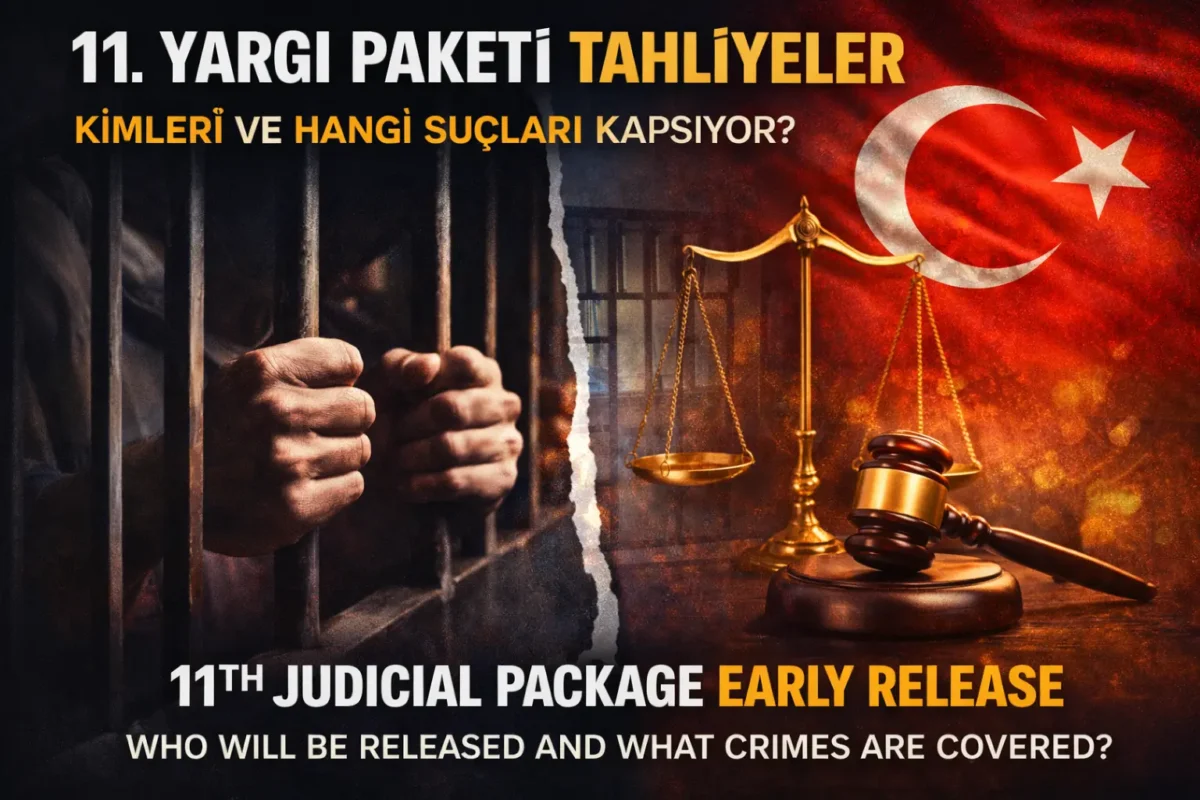
Türeli & Ceylan Law Firm – Criminal & Penal Law
Turkey’s 11th Judicial Reform Package, passed into law in 2025, brings significant changes to the country’s sentence execution and probation system. While the new law allows for early release of some prisoners, it explicitly excludes certain serious crimes.
1. What Does the Reform Cover?
The reform is not a general amnesty. It introduces modifications to how sentences are served, including earlier transfer to open prisons and extended eligibility for probation. Its focus is on fairness in execution, rehabilitation, and reintegration.
2. Who May Be Released?
Offenders who committed crimes on or before July 31, 2023, may benefit:
- Faster transfer from closed to open prisons
- Longer probation periods enabling early release
- Women, elderly, and disabled inmates may be assessed under flexible rules
- An estimated 50,000 inmates are expected to be released in the first stage
3. Crimes Not Covered by the Reform
The following crimes are explicitly excluded:
- Sexual offenses (including child abuse and assault)
- Terrorism and organized crime
- Intentional homicide
- Deaths caused through negligence during disasters (e.g., earthquakes)
4. Legal Application
- Release is not automatic. Each case is evaluated individually by execution judges.
- The reform does not erase sentences; it only affects how and when the sentence is served.
5. Frequently Asked Questions
Q: Is this an amnesty law?
A: No. It is an infaz reform, not a pardon.
Q: What is the cut-off date for eligible offenses?
A: Crimes committed on or before July 31, 2023.
Q: Is every convict eligible?
A: No. Serious crimes like terrorism or sexual offenses are excluded.