Holding and Group Company Structures: Strategic Institutionalization & Legal Framework
10 December 2025
What to Do If You Have Signed a Blank Promissory Note?
16 December 2025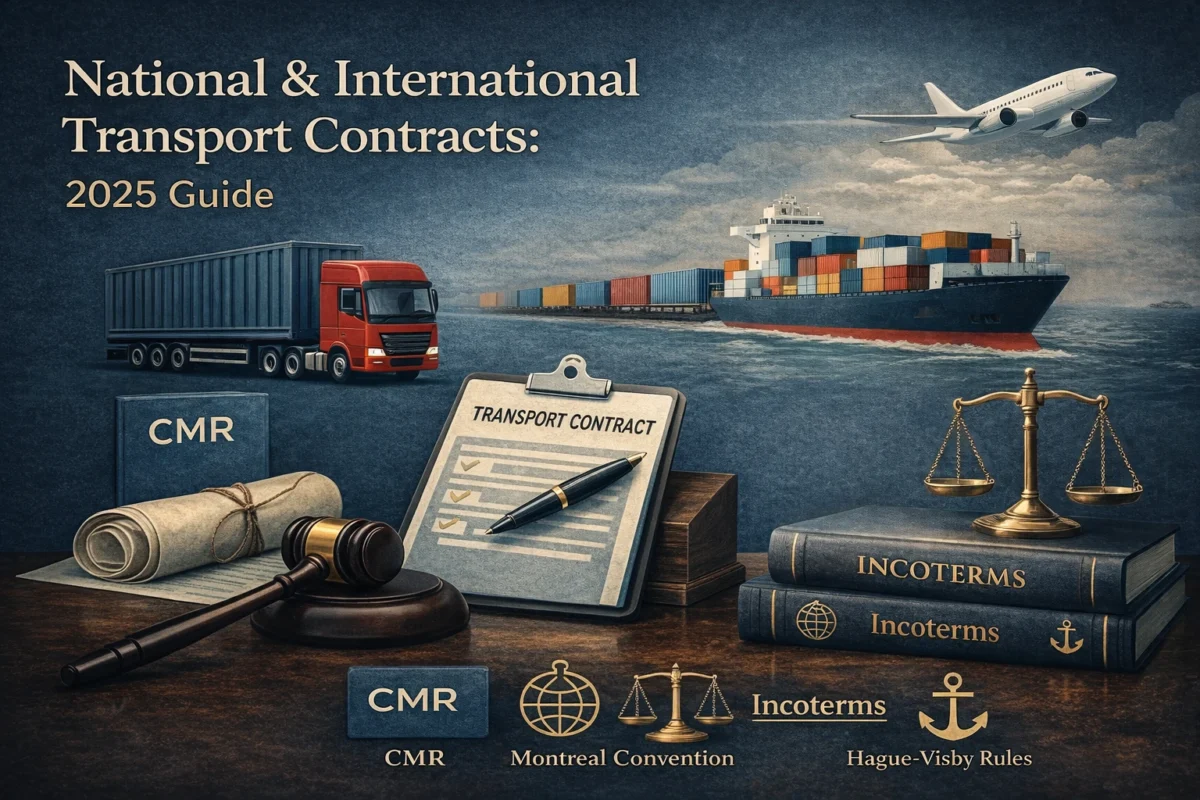
A transport contract obliges the carrier to safely deliver goods or passengers for a fee. Weak drafting escalates exposure on liability caps, delay, loss/damage, insurance fit, and law/forum.
1) Domestic Framework (Türkiye)
- TCC Arts. 850–930: Carriage of goods, carrier’s duties, transport documents, delivery, liability for delay/damage.
- TCO Arts. 444 ff.: General contract rules supplementing carriage.
- Special regimes: International conventions prevail where applicable.
2) International Regimes
- Road – CMR: Liability caps, strict notice/limitation periods, delivery documents.
- Air – Montreal Convention: Convention liability for loss/damage/delay; limitation period and evidentiary rules.
- Sea – Hague-Visby / Hamburg Rules: Package/weight-based limitation; bill of lading discipline.
- Rail – COTIF/CIM: Liability architecture and time bars.
Tip: Convention SDR-based caps and rigid deadlines should be restated verbatim in contracts (numbers, SDR references, conversion mechanics).
3) Domestic Contracts – Focus Points
- Waybill content (parties, cargo specs, weights, packaging).
- Transit time & routing with deviation/alternative routing instructions.
- Loading/stowage responsibility allocation.
- Insurance alignment: Cargo insurance vs. carrier’s liability cover; exclusions and deductibles.
4) Typical Risks & Contractual Tools
- Delay: Replace “reasonable time” with measurable ETAs and liquidated damages.
- Sensitive cargo: Packaging standards, stowage plans, temperature control, logger data as evidence.
- Counting disputes: Use SLAC where appropriate; allocate burden of proof.
- Force majeure/hardship: Closures, strikes, extreme weather; price-adjust/standstill.
- Borders & customs: Document packs and demurrage/detention allocation.
- Choice of law/forum: Tiered clause (convention → chosen law); interim measures/arrests.
- Notice & time bars: Spell out form and deadlines from CMR/Montreal/Hague-Visby.
- Sub-carriage: Back-to-back obligations and indemnity/hold-harmless chains.
- Electronic docs: e-CMR/e-B/L; add evidence clause (hash/time-stamp acceptance).
5) Ten-Point Drafting Checklist
- Parties & definitions (shipper, consignor, carrier, actual carrier).
- Goods (type/quantity/value) and declared value consequences.
- Route & intermodal split.
- Delivery model (door/terminal; Incoterms interplay).
- Liability limits (convention caps + contractual overlay; wilful misconduct carve-out).
- Notice regime & deadlines (written form, electronic service).
- Insurance (type, limits, exclusions, war/strike).
- Pricing & surcharges (fuel, demurrage/detention, waiting).
- Dispute resolution (arbitration/courts, seat, language; interim relief/arrest).
- Compliance (sanctions/export control, data protection, anti-bribery).
FAQs
Does CMR apply automatically?
To cross-border road carriage—yes, subject to scope rules.
Do Incoterms change the carrier’s convention liability?
They allocate costs/risk between seller/buyer but do not displace the carrier’s convention duties.
Are electronic transport documents enforceable?
If accepted by law and via evidence clauses between parties—yes, increasingly so.
Should I restate caps and time limits in the contract?
Yes—state SDR caps, notice forms and time bars expressly.
Transport contracts allocate risk, time and money across complex chains. Convention interplay and strict deadlines demand precision.
This note is for general information only and not legal advice. Türeli & Ceylan assists with drafting, review, insurance alignment and disputes.