Dismissal of a Director in a Limited Liability Company
14 October 2025
What Is the Insurance Arbitration Commission and How Do You Apply?
30 October 2025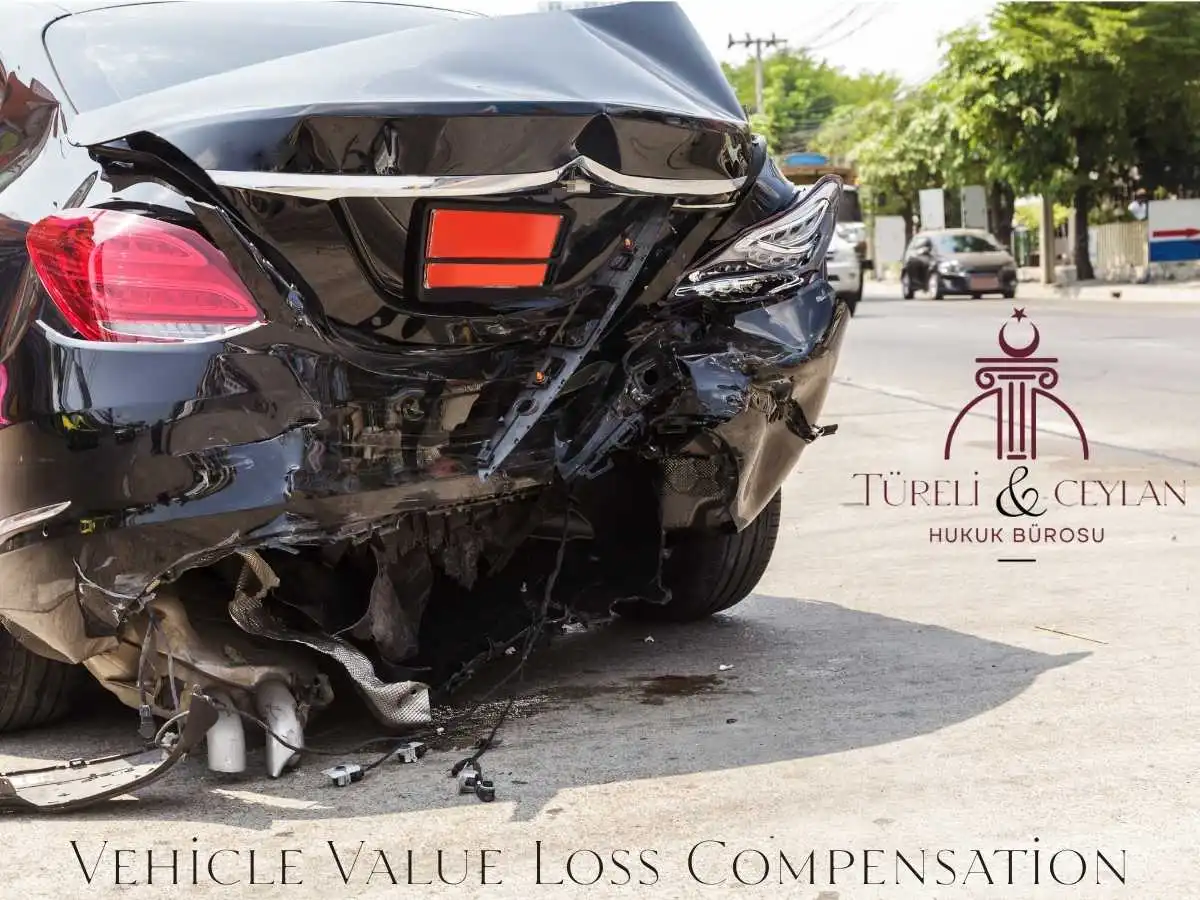
1) What Is Diminished Value?
Diminished value is the market-price drop that remains after repairs—driven by accident records, replaced/painted parts, and expert notes—so that the car sells for less than an undamaged equivalent.
2) Legal Framework
- Under general tort rules of the Turkish Code of Obligations, diminished value is a pecuniary loss.
- Within the compulsory liability insurance (CTPL/ZMSS) regime, the at-fault party’s insurer is liable within policy limits.
- Court practice treats diminished value as technically assessable through automotive/actuarial methods.
3) When Can You Claim? (And Common Misconceptions)
Typical eligibility factors:
- You are fault-free or less at fault than the other driver.
- Repairs were performed and the loss is recorded.
- Age/mileage influence quantum (older/high-mileage cars often see lower awards, not an automatic bar).
- Limitation: 2 years from knowledge and 10 years absolute (TCO Art. 72); insurer filing + 15-day waiting apply.
Misconceptions:
- “Severe damage record kills the claim.” → It usually reduces/reshapes the amount; it doesn’t automatically bar recovery.
- “Any fault bars recovery.” → Contributory negligence may reduce the award; a fully at-fault owner cannot recover.
4) Whom to Sue?
- The compulsory traffic insurer (within limits).
- The driver and operator/owner (for the excess, often joint and several).
- Forum: Insurance Arbitration Commission or civil/commercial courts.
5) Claim & Litigation Roadmap
- Accident documents: police/accident report, photos/videos, witnesses.
- Repair records: invoices, part lists, paint/bodywork items.
- Independent appraisal: diminished value report with market evidence.
- Written claim to insurer; wait 15 days.
- If rejected/short-paid:
- File with the Insurance Arbitration Commission (often 4–6 months), or
- Sue in court (expert evidence).
- Interest: commonly from insurer default/application; against driver/owner, sometimes from accident date.
- Enforcement after final award.
6) How Is It Calculated?
Methods weigh make/model, year, mileage, number/type of damaged/replaced panels, structural impact, paint thickness, market liquidity and repair quality.
Rules of thumb:
- Structural damage and multi-panel paint/replacements increase loss.
- Purely cosmetic repairs reduce it.
- Segment and market depth matter; so does OEM vs. aftermarket and repair quality.
Practice tip: Support the formula outcome with real market data (comparable listings, expert opinions).
7) Evidence & Strategy
- Full repair invoices with part numbers.
- Pre/post appraisals (incl. paint-thickness readings).
- Market comps and price-impact analysis.
- Photos/videos and workshop correspondence.
- Service & mileage records to show maintenance history.
8) Common Pitfalls
- Submitting only a bare formula without market proof.
- Forgetting VAT/labor or ancillary items.
- Missing limitation or the 15-day wait.
- Under-documenting structural damage.
9) Quick FAQs
Rental cars? Claims usually belong to the lessor; check contract/risk allocation.
If accident record is later removed? You may still recover with proof of real price impact.
Total-loss/previous salvage title? Typically limited or no diminished value—fact dependent.
Disclaimer: Informational only; not legal advice. For tailored strategy, consult counsel. Türeli & Ceylan manages the process end-to-end, from insurer filing to enforcement.